
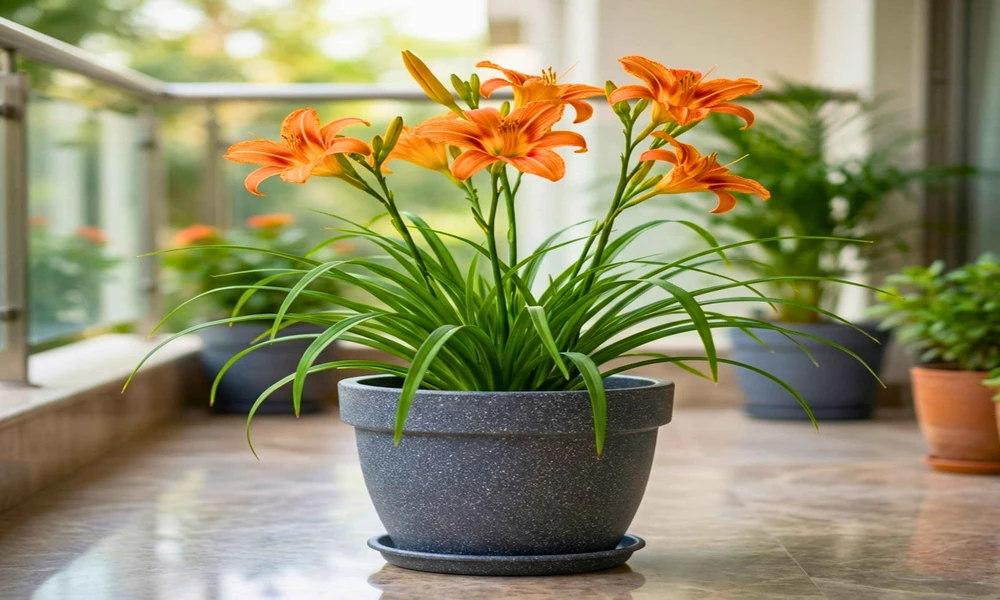
Light shade is a moving condition. A border may lose the sun behind a fence for part of the afternoon, receive shifting light through an open tree canopy, or become darker as neighbouring plants fill out. Those situations deserve a closer look than the single word “shade” allows. Daylilies can be considered for the lighter end of the range, although more sunshine generally means better flowering.
These ten suppliers give British gardeners useful ways to choose Hemerocallis for such borders. Their offers combine suitable positioning information with different sizes, quantities and degrees of cultivar choice. The intention is to find a plausible plant for a particular place, not to reclassify daylilies as dependable flowers for deep, permanent shade.
Reading the light before choosing a supplier
The shortlist requires a real daylily offer and support for its use in partial shade, either in the supplier’s product information or in relevant guidance read alongside the offer. Mature proportions and the way plants are sold then help distinguish between suppliers. The order reflects the usefulness of those combinations rather than measured flowering performance under identical shade.
Swallowtail Daylilies begins the comparison with specialist guidance and a light-flowered example. Other colours follow because flower colour is not the criterion for shade tolerance. The common requirement is a border that still receives worthwhile light. If you cannot yet describe when sunlight reaches the intended spot, observe it before choosing between the offers.
1. Swallowtail Daylilies
Swallowtail Daylilies lets British gardeners browsing white Daylilies consult specialist growing guidance before choosing for a lightly shaded border. The nursery’s guide allows partial or dappled shade while recognising the contribution of sunshine to flowering. That connection between a sale range and an explained position is the reason to start here, especially when the proposed site falls somewhere between full sun and the shadow of nearby planting.
The filtered White/Cream selection includes Gentle Shepherd, which the RHS describes as ivory-flowered and suitable for partial shade under appropriate growing conditions. It gives the reader a concrete light-flowered option within the linked range. The colour can suit a pale planting scheme, but it is not the cause of the plant’s suitability for the position. Other white selections still need their own dimensions and growing requirements checked.
This supplier is therefore useful for someone who wants to make two decisions together: whether the light is adequate and which daylily belongs in the colour plan. The specialist catalogue supports the second decision while the guide helps frame the first. Neither the filter nor the nursery’s recommendation promises equal flowering in sun and shade, so leave room for the actual border conditions to settle the final choice.
2. Claire Austin
If the border receives dappled light beneath an open canopy, Claire Austin offers lilioasphodelus in a one-litre pot with that position expressly allowed. Deep shade is excluded. The plant is described as reaching about sixty centimetres high and wide, with fragrant yellow flowers in May and June.
That early season may help a gardener whose later summer display is already well supplied. It does not justify assuming that every tree-covered position will be bright enough: consider the canopy when the plant is actively growing, not only the bare branches in winter. The nursery’s useful contribution is the combination of a specific light allowance, stated proportions and a definite commercial format. It makes the decision more precise than simply buying any plant filed under “partial shade”.
3. Macplants
How much flowering are you expecting from the shaded position? Macplants makes that question unavoidable by tagging Marion Vaughn for partial shade while also explaining that shade can reduce the display. The two statements can both be true: a clump may grow satisfactorily and still carry fewer flowers than it would in stronger light. That is useful candour to read before ordering its two-litre plant.
The listed spread is around seventy-five centimetres. If the only bright opening is narrow, room may become the deciding issue before shade tolerance does. I would keep this offer for a generous position with worthwhile sunshine, where the named cultivar can develop and a somewhat reduced display would still be welcome. Its appeal is the realistic description of performance, with the supplied pot and eventual footprint clearly stated.
4. Ballyrobert Gardens
Ballyrobert Gardens offers a compact route through Happy Returns, described for sun or partial shade and reaching roughly thirty to forty-five centimetres high and wide. That combination matters when the brighter part of a border is a modest opening rather than a long empty bed. An approximately half-litre sale pot also allows a small-scale introduction before the clump develops. The nursery describes relatively low light in its own garden, alongside heavy clay and rain; this is useful context from the grower, not a prediction of identical performance at your address. Choose the offer for its stated position and manageable proportions, while considering how surrounding foliage will affect that opening as summer progresses. The nursery publishes delivery to the UK, so its Northern Ireland location does not restrict the comparison to local visitors.
5. Cotswold Garden Flowers
Cotswold Garden Flowers gives the undecided gardener room to compare. Its live daylily shop includes lilioasphodelus among a range of named plants, and the category’s care answers allow partial shade in well-draining soil. Once the border has been observed through the day, that combination makes a sensible starting point for choosing an individual plant to match its brighter periods. I would keep the light description beside the catalogue while looking at the other details that matter at home: the colour already present, the season needing flowers and the room left by neighbouring clumps. The commercial listing must settle availability, since the nursery’s wider encyclopedia records plants beyond the live offer. This route preserves control over one exact choice where a mixed package would leave too much to decide later.
6. Farmyard Nurseries
A long border with intermittent shade can call for several plants at once. Farmyard Nurseries’ collection supplies six different named daylilies in two-litre pots and explicitly includes semi-shade in the product information. That gives a larger planting project a practical starting offer without requiring the buyer to compose six separate catalogue selections.
The nursery chooses the varieties, so the plan needs some flexibility. Wait for the individual identities and dimensions before assigning every plant its final position; different forms need not occupy identical spaces simply because they arrive in one package. The offer is strongest where light shade is spread across a sizeable, suitable bed and variation is welcome. For one precise gap under a particular neighbour, a single named selection offers more control than this assortment.
7. J. Parker’s
If several suitable openings are available and the colour plan is flexible, J. Parker’s three-plant Hemerocallis Mix is a possible starting point. The one-litre plants are recommended for partial shade, with a stated mature height of about sixty centimetres, but the mixture arrives without cultivar names. It therefore asks for a different kind of commitment from the individually selected plants above.
I would reserve the spaces before ordering, then allow the actual plants to determine their final arrangement. A medium-height daylily can disappear behind a broad neighbour as summer develops, even where the ground looked bright in spring. The supplier’s offer fits an informal planting whose three positions remain light and open enough; its uncertainty about individual identity matters much less there than in a carefully labelled or single-colour scheme.
8. Swines Meadow Farm Nursery
Swines Meadow Farm Nursery lists Hemerocallis fulva Europa in a three-litre pot and expressly allows sun or partial shade. For a buyer who wants a named species offer in a larger starting container, that is a clear alternative to the small pots and mixed packs elsewhere in the list. The nursery checks stock before arranging payment, with collection available, so the order can be confirmed directly. That process is particularly useful if one specific plant is central to the border plan. Discuss the actual specimen and agree the buying route, while keeping the site judgement separate: a larger pot cannot compensate for a position that remains dark. The reason to consider this supplier is the combination of an identified plant, a stated partial-shade allowance and a confirmed nursery order.
9. Bluebell Cottage Gardens
A small opening near the front of the border points towards Bluebell Cottage Gardens. Its Happy Returns page allows partial shade and describes a plant around forty centimetres tall, so the choice begins with a compact cultivar whose position is supported by the listing. A posted 9cm pot is available, while a local Cheshire buyer can collect the larger one-litre version. Those are two starting routes to the same eventual scale. If the opening stays reasonably bright once the surrounding perennials are fully grown, either could be a practical purchase; if taller neighbours close over it, the plant will need another place. I would settle that question of summer clearance first, then choose the format according to the convenient buying route. The nursery’s offer helps because it keeps identity and mature size constant while changing the starting pot.
10. New Hope Daylilies
New Hope Daylilies provides a useful final test for a borderline position. Its guide permits partial shade where daylilies still receive a substantial amount of sunshine and emphasises sunny conditions for the best results. A gardener describing a bed as “partly shaded” may therefore need to reconsider whether it matches the conditions the nursery has in mind.
That more demanding interpretation is a positive reason to consult this specialist before ordering. Its seasonal bare-root service and arranged potted collections offer real buying routes once a suitable cultivar and position have been settled. If the site only loses the sun for part of the day, the nursery’s selection may be worth pursuing. If it receives little direct light all summer, use the guidance to pause the purchase and reassess the planting instead of expecting a supplier change to solve the light problem.
Watch the border through the season
Look at the intended space when the surrounding plants are fully grown. A gap that seems bright before a shrub leafs out can become a very different position by flowering time. Notice the duration and pattern of light, as well as the moisture and room available to the roots.
Then choose an offer that matches the scale of the decision. One named plant gives control in a precise gap; a varied collection works where several suitable positions can be assigned later. Keep the expectation of flowering proportionate to the light you can provide. That is the judgement that connects a supplier’s encouraging description with a border that can actually support the result.
Source note: Light and supply information from the ten named suppliers was read with Royal Horticultural Society Hemerocallis guidance and its Gentle Shepherd profile. Flower colour is used as a design choice, not as evidence of shade tolerance.
