
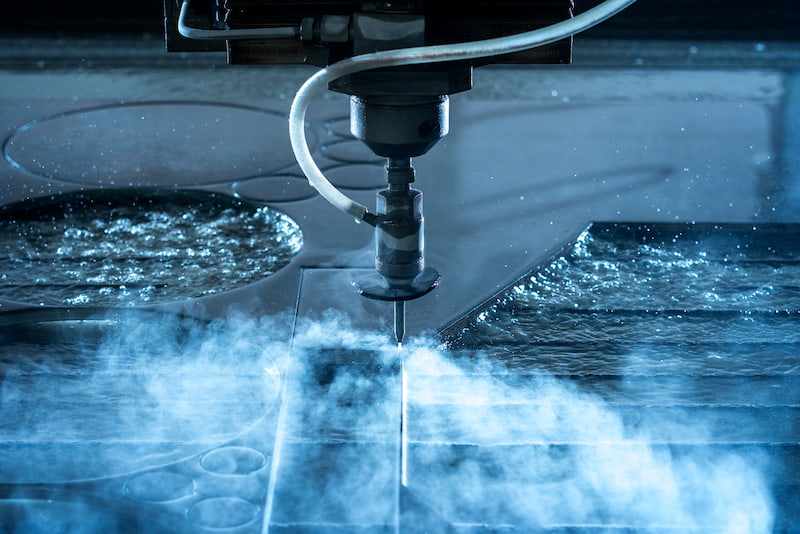
Water jet cutting is a popular and versatile cutting method used in various industries such as aerospace, automotive, and construction. It is a unique cutting process that uses a high-pressure jet of water mixed with an abrasive material to cut through various materials with precision and accuracy.
This article will explore water jet cutting in detail, discussing its benefits, applications, and the technology behind it.
What is Water Jet Cutting?
Water jet cutting is a process of cutting materials using a high-pressure jet of water mixed with an abrasive material. The abrasive material helps to increase the cutting power of the water jet and allows it to cut through hard and tough materials like metals, ceramics, glass, and stones.
The water jet is generated by a high-pressure pump that can generate pressures of up to 60,000 pounds per square inch (psi).
Benefits of Water Jet Cutting
Water jet cutting has many benefits that make it a popular choice in various industries. Some of these benefits include:
- Precision and Accuracy: Water jet cutting is a precise cutting method that can cut materials with an accuracy of 0.1mm or less. This makes it an ideal choice for cutting intricate shapes and designs.
- Versatility: Water jet cutting can cut through a wide range of materials, including metals, plastics, composites, glass, and stones. This makes it a versatile cutting method that can be used in various industries.
- No Heat-Affected Zone (HAZ): Water jet cutting does not generate heat during the cutting process, which means that there is no heat-affected zone (HAZ) around the cut edges. This makes it ideal for cutting materials that are sensitive to heat.
- Environmentally Friendly: Water jet cutting does not generate any hazardous waste or fumes, making it an environmentally friendly cutting method.
Applications of Water Jet Cutting
Water jet cutting is used in various industries and applications, including:
- Aerospace: Water jet cutting is used in the aerospace industry to cut materials like titanium, aluminum, and composites used in aircraft parts.
- Automotive: Water jet cutting is used in the automotive industry to cut materials like metals and plastics used in car parts.
- Construction: Water jet cutting is used in the construction industry to cut materials like stone, granite, and marble used in building facades, floors, and walls.
- Manufacturing: Water jet cutting is used in manufacturing to cut materials like metals, plastics, and composites used in various products.
Technology behind Water Jet Cutting
Water jet cutting technology involves three main components: a high-pressure pump, a cutting head, and a computer control system. The high-pressure pump generates the water jet, which is then directed to the cutting head.
The cutting head is where the water jet is mixed with the abrasive material and focused on the material being cut. The computer control system controls the movement of the cutting head and the intensity of the water jet, ensuring precision and accuracy.
Conclusion
Water jet cutting is a precise and versatile cutting method that is used in various industries and applications. Its benefits, such as precision, versatility, and environmental friendliness, make it a popular choice for cutting hard and tough materials. The technology behind water jet cutting is complex, involving high-pressure pumps, cutting heads, and computer control systems.
Overall, water jet cutting is a valuable cutting method that has revolutionized the way materials are cut and shaped in modern industries.
