
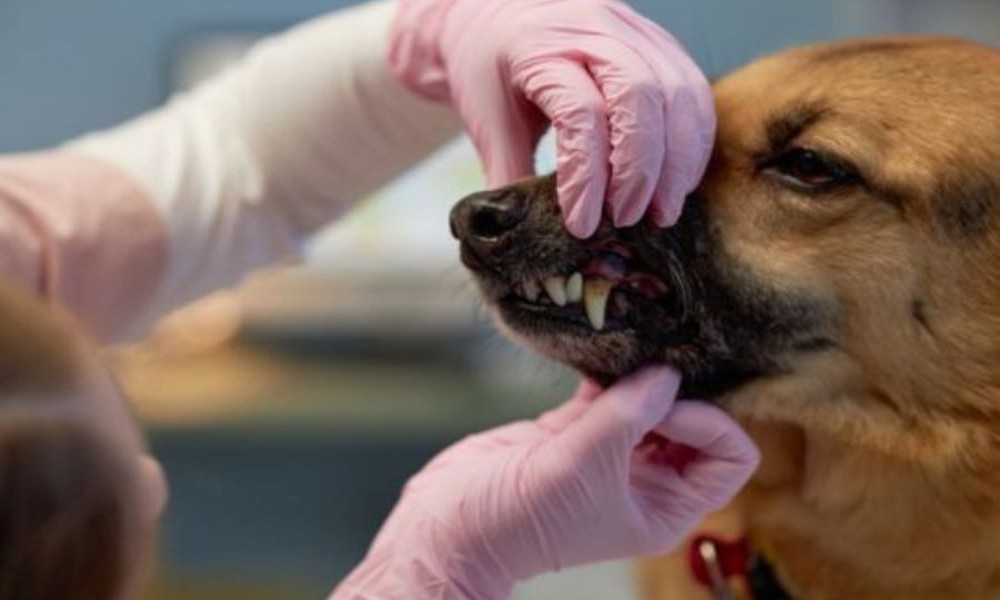
You might be here because your veterinarian in Port Neches, TX recommended dental X rays for your pet, and you are staring at the estimate wondering if this is really necessary. It may have started with “We should schedule a dental cleaning,” and suddenly there is talk about anesthesia, imaging, and hidden problems you cannot even see. It is normal to feel uneasy when you cannot tell which parts of the plan are optional and which are essential for your pet’s health.end
You want to be a good guardian. You also do not want to agree to something that feels excessive or unclear. Because of this tension, you might be asking yourself a simple question. Why are dental X rays standard in many animal hospitals, and what are they actually doing for your pet?
Here is the short version. Most serious dental disease in dogs and cats is hidden below the gumline where you cannot see it, and where your veterinarian cannot see it either without imaging. Dental X rays reveal those hidden problems, guide safer treatment, and often prevent years of pain, infection, and future expense. Once you understand what they show, they stop feeling like an “extra” and start looking more like the foundation of good dental care.
“My pet eats fine, so do we really need dental X rays?”
This is one of the most common questions veterinarians hear. From your side, your dog is still chewing on toys, your cat still shows up at the food bowl, and maybe you only notice a little bad breath. It is easy to assume that if your pet is eating, the teeth must be okay.
Here is the hard part. Animals are very good at hiding pain. A dog can have a cracked tooth with an exposed nerve and still chase a ball. A cat can have a deep root infection and still jump onto the counter for treats. You might only see a hint of tartar, while under the gum there is bone loss, infection, or a tooth that never formed correctly in the first place.
Because you cannot see under the gums, you are being asked to make a decision in the dark. That is uncomfortable. It can also feel unfair when money is tight and you are trying to prioritize. So where does that leave you?
This is where dental radiographs, sometimes called veterinary dental imaging, come in. They pull back the curtain. A normal looking tooth on the surface may have roots eaten away by disease. A slightly red gum line may hide a tooth resorbing from the inside out. Without X rays, your veterinarian is guessing. With them, your veterinarian is making decisions based on facts.
What problems do dental X rays actually find in pets?
To understand why dental X rays are now considered standard in many animal hospitals, it helps to picture what they can reveal during a routine cleaning under anesthesia.
Imagine your dog is in for a “simple” cleaning. The visible tartar is removed. The teeth are polished. Everything looks pretty good. If no X rays are taken, you might go home believing the mouth is healthy. Yet under the gumline, there could be:
- A cracked root that will become an abscess in a few months.
- Advanced bone loss around a tooth that makes it unstable and painful.
- A dead tooth from an old trauma, quietly harboring infection.
Now imagine the same cleaning for your cat, but this time your veterinarian includes full-mouth dental X rays. Those images might uncover:
- Resorptive lesions, where the body “eats” the tooth from the inside, leaving only fragile outer shell.
- Retained roots from a previous extraction that never fully healed.
- Teeth that never erupted but are trapped under the gum, causing discomfort.
With those findings, the treatment plan changes. Instead of polishing a painful tooth and sending your pet home, your veterinarian can treat the real problem while your pet is already safely under anesthesia. That might mean extracting a diseased tooth, treating an infection, or monitoring a minor finding before it becomes serious.
If you are curious about how deeply dental teams rely on these images, take a look at the dentistry and oral surgery information from Cornell University’s veterinary hospital, which shows how central dental radiographs are to proper diagnosis and treatment. You can explore that here: veterinary dentistry and oral surgery services at Cornell.
Are dental X rays in pets really the standard of care now?
Over the last decade, there has been a quiet but strong shift in how veterinarians view pet dental care. What once seemed like an “extra” has become part of what many professional groups consider basic good practice.
For example, the World Small Animal Veterinary Association has published detailed global dental guidelines for dogs and cats. These guidelines strongly support the use of dental radiographs for full evaluation of the teeth and surrounding bone, especially during professional cleanings and any extractions. Many hospitals now follow these standards as part of everyday care.
So when you see an animal hospital recommending full-mouth X rays as part of a dental procedure, it is often because they are aligning with these evidence-based guidelines. The goal is not to add cost. The goal is to avoid missing disease that will hurt your pet later.
Comparing the tradeoffs: are dental X rays worth it for my pet?
It is fair to ask about the tradeoffs. There is cost. There is anesthesia time. There is your own worry. Balancing those against the benefits can help you decide what feels right.
| Question | Dental Cleaning With X Rays | Dental Cleaning Without X Rays |
|---|---|---|
| What can the vet actually see? | Both visible tooth surfaces and hidden roots, bone, and trapped teeth. | Only what shows above the gumline. |
| Chance of missing serious disease | Much lower, since hidden problems are often revealed. | Higher, especially for root infections, resorptive lesions, and bone loss. |
| Future procedures and cost | More problems caught early. Often fewer surprise extractions or emergencies later. | Higher risk of emergency visits, repeat anesthesia, and late-stage disease. |
| Pet’s comfort over time | Better chance of removing painful teeth and infection in one procedure. | Painful conditions may continue unnoticed until they become severe. |
| Immediate price of the visit | Higher one-time cost because of imaging. | Lower at first, but may be followed by additional procedures and costs. |
When you look at it this way, you are not just choosing “X rays or not.” You are choosing between a more complete picture now, or a partial picture that may need to be corrected later. For many pets, especially middle-aged and older animals, the long-term comfort and reduced risk of surprise problems make routine dental radiographs for pets a very reasonable investment.
Three practical steps you can take right now
1. Ask your veterinarian to walk you through your pet’s mouth and X ray plan
Before the procedure, ask for a few minutes to review what your veterinarian sees during the oral exam. Ask which teeth or areas are of most concern and how dental X rays will change what they can diagnose. A calm, visual explanation often makes the cost and the plan feel much more understandable.
2. Discuss anesthesia time, safety, and any health conditions
Many people worry more about anesthesia than about the teeth themselves. Share your concerns openly. Ask how long the anesthesia is expected to last with and without X rays. Talk about your pet’s age, heart health, and any other conditions. A good team will explain how they monitor your pet and how they weigh the benefit of imaging against anesthesia time.
3. Plan for dental care as a recurring health need, not a surprise
Dental disease is one of the most common health problems in companion animals. Instead of treating each cleaning as an unexpected event, consider it part of your pet’s regular healthcare. Ask your veterinarian how often they expect your pet will need professional cleanings and X rays. You can then budget ahead, consider pet insurance, or set aside a small monthly amount, which can ease the financial stress when the time comes.
Where you go from here
You are not wrong to pause and question. You are not overreacting to feel worried when a treatment plan is longer and more expensive than you expected. Those concerns mean you care deeply about both your pet’s comfort and your family’s resources.
Now you know why many animal hospitals include dental X rays as standard during dental procedures. They are not just an add-on. They are a way to see the truth of what is going on under the gums, to treat real problems instead of guessing, and to give your pet a mouth that is not just clean, but comfortable.
The next step is simple. Talk with your veterinarian. Ask your questions. Request clear explanations of what the X rays may show and how that could change your pet’s care. With that conversation, you can make a decision that feels informed, kind, and steady, for both you and your animal.
