
Your child’s mouth grows fast, and small changes can signal big steps. When you know what to watch for, you can protect your child from pain, infection, and speech problems. This guide explains five early dental milestones that matter for your child’s health. You will see when teeth should appear, how the bite should look, and when habits like thumb sucking start to cause harm. You will also learn when a first visit to a dentist in Joliet, IL makes sense. Early checks keep tiny problems from turning into deep cavities or tooth loss. They also help your child feel safe in the dental chair. You do not need special training. You only need clear signs and simple steps. These milestones give you that.
1. First tooth coming in
The first tooth is the start of your child’s bite and smile. It also marks the time to change how you clean the mouth.
Most babies get the first tooth between 6 and 10 months. It is often a front bottom tooth. Some babies get teeth earlier. Some get them later. You do not need to panic if the timing is different. You only need to watch for warning signs.
Watch for:
- No teeth at all by 12 months
- Swelling that looks red or full of pus
- Fever or rash that seems strong or lasts long
Here is a simple timeline you can use as a check. Timing is from the American Dental Association.
| Tooth group | Usual first appearance | When to ask a dentist |
|---|---|---|
| Lower front teeth | 6 to 10 months | No sign by 12 months |
| Upper front teeth | 8 to 12 months | No sign by 14 months |
| First molars | 13 to 19 months | No sign by 24 months |
| Canines | 16 to 23 months | No sign by 28 months |
| Second molars | 23 to 33 months | No sign by 36 months |
Once the first tooth shows, use a soft baby brush. Use a smear of fluoride toothpaste, the size of a grain of rice. Wipe the tooth after each feeding and before bed. This one habit blocks early decay.
2. First full set of baby teeth
By age 3, most children have a full set of 20 baby teeth. This full set helps your child chew food, form words, and hold space for adult teeth.
Check three things at this stage.
- Teeth line up in both jaws
- Front teeth touch or almost touch
- No brown or white spots on the teeth
White chalky spots near the gums can be early decay. Brown pits or holes are deeper decay. If you see these, you should call a dentist. You should not wait.
At this point, shift to brushing two times each day. Use a pea size amount of fluoride toothpaste once your child can spit. You can confirm this with your child’s doctor or dentist. The Centers for Disease Control and Prevention notes that early decay often starts in these baby teeth. Daily care and cleanings stop this pattern.
3. First dental visit
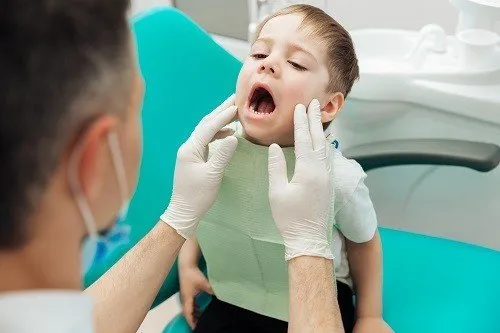
The first visit is not about drilling. It is about trust and teaching. You should plan this visit by age 1. You should also plan it within 6 months of the first tooth.
During this visit, the dentist will usually
- Look at gums, tongue, and all teeth
- Check for early spots of decay
- Review brushing and diet with you
- Talk about thumb sucking or pacifier use
This visit also helps your child see the office as a safe place. You can bring a comfort toy. You can keep your child on your lap. You can ask the dentist to move slow and explain each step to your child.
You should call for a visit sooner if you see pain, swelling, or bleeding. You should also call if your child hits the mouth during a fall.
4. Changes in bite and jaw growth
As more teeth appear, the way the top and bottom teeth meet starts to matter. This bite affects chewing, speech, and jaw growth.
Look at your child’s bite when the teeth are closed.
- Top front teeth should slightly overlap bottom front teeth
- Back teeth should touch evenly on both sides
- Jaw should not shift to one side when closing
You should watch for warning signs.
- Front teeth do not touch at all when biting
- Bottom front teeth cover the top teeth
- Jaw looks pushed far forward or far back
- Chin shifts to one side on closing
These signs can show early crowding or jaw issues. A dentist might guide you to an orthodontist. Early checks can use growth to correct problems with less effort later.
5. Thumb sucking, pacifier use, and grinding
Many children suck a thumb or use a pacifier. This can calm a child. It can also change the bite if it lasts too long or is too strong.
Here is a simple guide.
- Under age 2. Thumb or pacifier use is common. Just watch.
- Ages 2 to 3. Start to limit use to naps and night.
- After age 4. You should work on stopping the habit.
Long thumb or pacifier use can
- Push top teeth forward
- Stop front teeth from touching
- Change the shape of the upper jaw
Teeth grinding during sleep is also common in young children. It often peaks when new teeth come in. You might hear grinding sounds at night. You might see flat or worn edges on teeth.
You should talk with a dentist if
- Grinding seems loud and nightly
- Your child complains of jaw or face pain
- You see chips or cracks in teeth
A dentist can watch the teeth and suggest simple steps. These might include stress reduction before bed, changes in routine, or a guard for older children.
How to stay ahead of problems
You cannot control every tooth change. You can still cut the risk of pain and decay with three steady habits.
- Brush two times each day with fluoride toothpaste
- Limit juice and sticky snacks between meals
- Schedule regular dental visits starting by age 1
These early milestones help you act fast. When you notice changes and get care early, your child avoids many common mouth problems. That means less fear, fewer tears, and a stronger smile that supports speech, eating, and self respect.
