
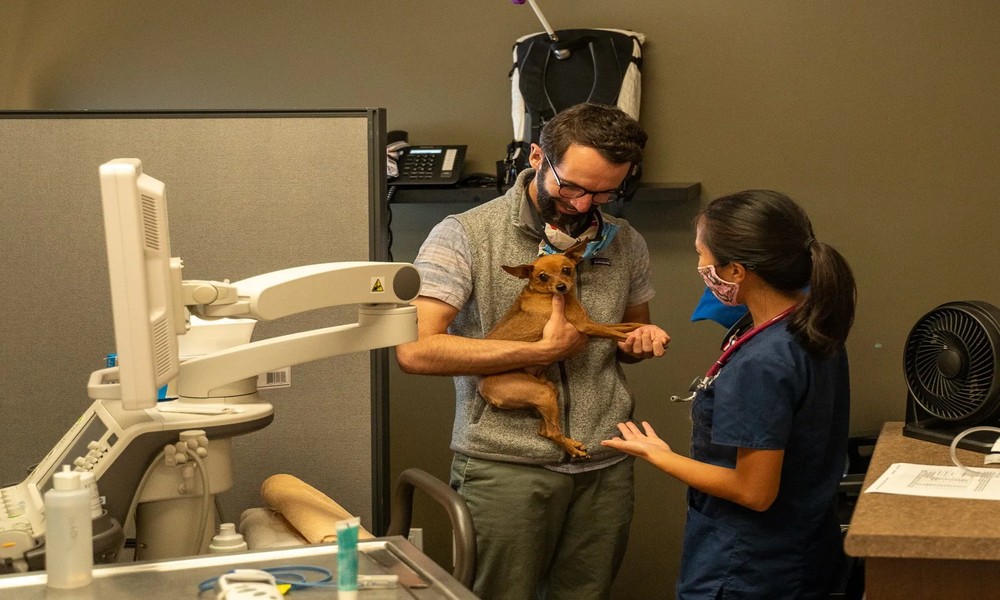
You might be noticing something that feels both reassuring and unsettling at the same time. Every time your pet has a limp that will not go away, a cough that sounds a bit worse, or a strange bump under the skin, your veterinary clinic and our experienced Flatwoods veterinary team seem to be suggesting more imaging. X rays. Ultrasound. Sometimes even CT or MRI. Part of you is grateful that there are more ways to find answers. Another part of you wonders if it is really necessary, what it will cost, and what it all means for your pet.
That tension is very real. You want to do the best for your animal, but you also do not want to be pressured into tests you do not fully understand. You may be worried about money, about anesthesia, about “what if they find something bad.” It can feel like veterinary medicine has become far more high tech than it used to be, and you are trying to catch up while also caring for a pet you love.
Here is the short version. Veterinary clinics are expanding diagnostic imaging services because these tools can catch problems earlier, guide treatment more accurately, and often avoid unnecessary surgery or guesswork. Used wisely, imaging can save time, money, and suffering. The key is understanding what each imaging option does, when it helps, and how to ask the right questions so you feel informed rather than pushed.
Why are so many veterinary clinics adding advanced imaging now?
Not long ago, many general practices had only basic X ray equipment. If your pet needed an ultrasound or CT scan, you were sent to a specialty hospital, often far away and with a long wait. Today, more clinics are adding in house ultrasound, partnering with mobile imaging teams, or connecting digitally with board certified radiologists. So what changed?
First, the technology itself has become more accessible. Machines are more compact and somewhat more affordable than they used to be. That means a typical veterinary clinic can now offer services that once belonged only in large referral centers. At the same time, pet owners are expecting better answers and better outcomes. Many people see their pets as family and are willing to invest in clearer diagnoses instead of “try this and see” medicine.
Because of this, you may feel a new kind of pressure. When your veterinarian suggests an ultrasound or CT, you might worry that saying no means you are failing your pet. Yet saying yes without understanding why can feel just as uncomfortable. So where does that leave you?
It helps to understand what these different imaging tools actually do. X rays are good for bones, lungs, and large shapes. Ultrasound is better for seeing inside organs like the liver or kidneys in real time. CT and MRI give very detailed 3D views. Resources from specialists, such as explanations of different types of imaging and therapy used by veterinary radiologists, can give you a clearer picture of why a certain test is being recommended.
What are the real problems imaging is trying to solve?
Imaging is not just about fancy pictures. It is usually about reducing uncertainty. Imagine your older dog has started coughing and slowing down on walks. Without imaging, your veterinarian might have to guess between heart disease, lung disease, infection, or even cancer. Treatment plans for each of these are very different. The wrong guess can mean weeks of the wrong medication, extra cost, and a pet that is not getting the help they need.
Now imagine your cat has a lump on the belly. You could jump straight to surgery, which is stressful and expensive, or you could use imaging to see whether the lump is in the skin, the muscle, or deep inside the abdomen. That one step can completely change the plan and sometimes avoid surgery altogether.
Of course, there is another side. Imaging brings its own worries. You might ask yourself, “What if the scan finds something I cannot afford to treat?” or “What if my pet has to be sedated and something goes wrong?” You are not alone in those fears. The cost of advanced imaging can be several hundred to several thousand dollars, and some studies require anesthesia, especially CT and MRI.
Specialty hospitals often outline their diagnostic imaging options and how they are used. For example, academic veterinary hospitals share how they use X ray, ultrasound, CT, and MRI together to reach a diagnosis, as you can see in this description of veterinary hospital diagnostic imaging. Reading how specialists think about imaging can make it less mysterious and help you decide what feels right for your own pet.
So the question becomes this. How do you balance the emotional and financial strain of more testing with the real benefits of finding answers sooner and more accurately?
How do the risks and benefits of veterinary imaging really compare?
To sort through the noise, it helps to look at typical tradeoffs. Every animal and situation is different, but there are some common patterns that can guide your thinking about expanded veterinary imaging services.
| Imaging option | Common uses | Benefits | Potential downsides |
|---|---|---|---|
| Standard X ray | Bone injuries, lung problems, some tumors, swallowed objects | Quick, widely available, usually lower cost, no anesthesia in most cases | Less detail for soft tissues, may miss small or early problems |
| Ultrasound | Abdominal pain, organ changes, fluid in chest or belly, some heart issues | Good view of soft tissues, real time movement, often no anesthesia needed | More expensive than X rays, depends on operator skill, sometimes needs follow up tests |
| CT scan | Complex fractures, nasal disease, chest masses, some cancers | Very detailed 3D images, excellent for bones and air filled spaces | Higher cost, usually needs anesthesia, limited availability in some areas |
| MRI | Brain and spinal problems, some soft tissue tumors | Best detail for brain, spinal cord, and certain soft tissues | Highest cost in many cases, always needs anesthesia, longer procedure time |
When clinics broaden their imaging options, they can match the test more closely to the question. That means fewer “fishing expeditions” and more targeted use of your time and money. The challenge is making sure you are part of that decision, not just watching it happen.
What can you do right now to make smarter imaging decisions?
1. Ask what question the imaging is supposed to answer
Before you agree to any imaging, ask your veterinarian, “What specific question are we trying to answer with this test?” A clear answer might sound like “We want to know if this cough is coming from the heart or the lungs” or “We need to see if this mass is invading deeper tissues.” If the answer is vague, gently ask for more detail. This helps you decide whether the test is worth the cost and the stress for your pet.
2. Discuss alternatives and timing
You can also ask, “If we do not do this imaging today, what are the risks?” Sometimes waiting a short time, trying medication, or starting with a simpler test is safe. Other times, delay could mean a missed window for treatment. Hearing your veterinarian compare options such as X ray versus ultrasound, or imaging now versus monitoring for two weeks, can give you back a sense of control over the plan.
3. Clarify cost, sedation, and next steps before you commit
Before you say yes, ask three practical questions. What is the estimated cost. Will my pet need sedation or anesthesia. How will the results change our treatment choices. If an expensive scan is unlikely to change what you do, you might decide to wait. If the results will strongly guide surgery, medication, or quality of life decisions, you may feel more confident moving ahead, even if it stretches the budget.
Moving forward with confidence as imaging continues to grow
As more clinics expand diagnostic imaging for pets, you will probably hear more about these tests over the coming years. That does not mean you must say yes to everything. It means you have more tools available, and your role is to work with your veterinarian so those tools are used wisely and kindly.
You are allowed to ask questions. You are allowed to say you are worried about money or anesthesia. You are allowed to ask for time to think unless your veterinarian tells you there is a true emergency. Good imaging does not replace good communication. It supports it.
When you understand why an imaging test is being offered and how it may help your pet, the choice often becomes clearer. You move from feeling pushed to feeling informed. From fear of the unknown to a grounded plan. Your pet does not need you to be perfect. They just need you to keep showing up, asking honest questions, and choosing the path that fits both their needs and your reality.
