
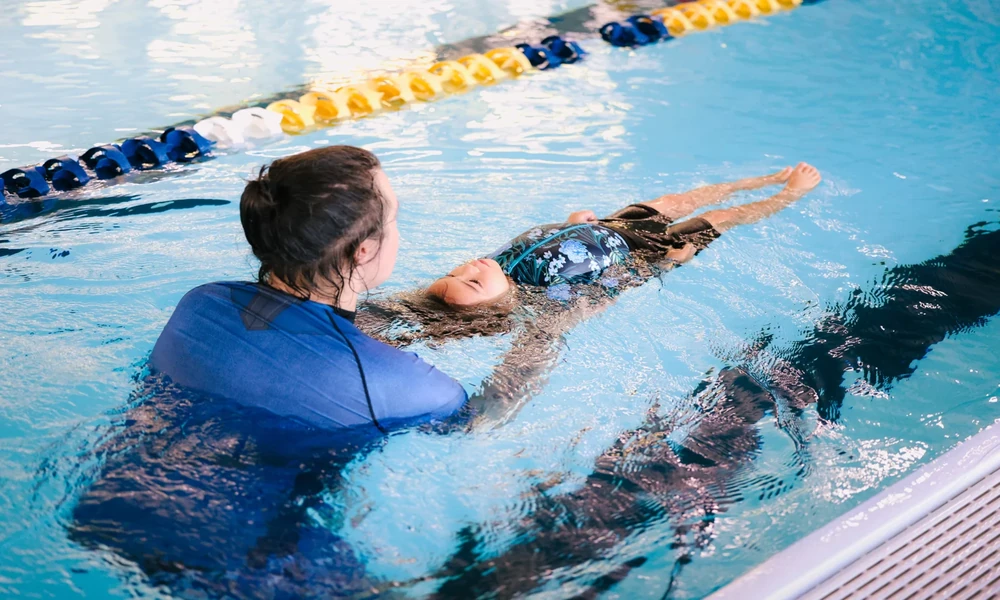
Seven minutes. That’s how long my kid screamed the first time I handed her to an instructor at the pool. Seven very long, very public minutes while every other parent pretended not to stare.
She’s twelve now and swims like a fish. But that first season nearly made me quit before we’d started.
So if you’re weighing swim lessons in Central Kentucky and quietly dreading the meltdown, this is for you. Most of the fear fades faster than you expect once you pick the right setup and show up a few times.
The short version: your kid will probably cry, you’ll both survive, and the payoff is worth every awkward minute. Here’s how to make the whole thing less painful.
Why the First Lesson Is Usually the Hardest
Water is strange to a small kid who has never been in it. The noise echoes, the floor disappears, and a stranger in a swim cap wants them to do something scary. No amount of cheerleading changes that overnight. It’s a brand new sensory world, and some kids need to walk into it slowly.
I’ve watched dozens of first lessons at this point, first as an anxious parent and later as a volunteer who helped line kids up at the pool deck. The kids who cried the loudest on day one were rarely the ones still crying in week four. Children settle in faster than parents do, honestly.
The Three-Visit Rule That Saved My Sanity
Before my second kid started lessons, I made a rule for myself, mostly to stop me from overreacting in the moment. I call it the Three-Visit Rule, and it works like this. Give any swim program three real sessions before you judge it. Not one. Not two. Three visits where your kid actually gets in the water, even if that means crying through the whole thing.
Here’s what happens across those three visits in my experience. Visit one is shock. Visit two is reluctant acceptance. Visit three is usually a kid who walks toward the water instead of away from it. If visit four still brings the same wall of tears, that’s your signal to change something, whether it’s the instructor, the group size, or the timing.
I’ll pick a program with a patient instructor and a smaller group over one with a fancier facility every single time. The facility doesn’t teach your kid. A calm human does.
Group Lessons or Private? Read This Before You Pay
Both have a place, and the right answer depends on your kid more than your budget. Group lessons are cheaper, and for most children they work well because kids learn by watching peers. Someone else goes first, survives it, and suddenly the water seems a lot less terrifying.
Private lessons cost more and move faster. They tend to make sense if your child is genuinely terrified, if they’re older and self conscious about learning alongside toddlers, or if you have a specific skill to fix before a pool or lake season starts.
| Your situation | What I’d choose | Why |
|---|---|---|
| First time in the water, age 3 to 6 | Small group | Peer watching does more than a private coach can |
| Older kid who’s afraid | Private or very small group | Less audience, less embarrassment |
| Already comfortable, wants strokes | Group | More reps and friendly competition |
| Weekend only availability | Whichever fits the schedule | Consistency beats format |
One note on scheduling. A lesson every Saturday for eight weeks teaches more than three lessons crammed into one eager week. Repetition is what sticks, and a spread-out schedule gives the skills time to sink in.
What the Numbers Say About Learning Early
You don’t have to take my word for any of this. Swimming is one of the few childhood skills where the stakes are genuinely about safety, not just fun. Baseline data from the CDC shows drowning remains a leading cause of accidental death for young children, which is exactly why early lessons matter.
If you want a broader picture of what kids actually gain from a good program, the American Red Cross sets some widely used standards for how lessons are structured and what skills a child should reach at each stage. When you’re comparing programs, those standards give you something concrete to ask about besides price.
How to Pick a Program Without Wasting a Season
You’ll have plenty of options across the region, and the details matter more than the marketing. Instead of chasing whichever pool has the shiniest brochure, ask these questions before you sign up.
- How many kids are in each class, and is the ratio posted?
- What happens on the first day if my child refuses to get in?
- Are instructors trained and certified through a recognized body?
- How do they handle a kid who’s scared but not disruptive?
- Can I watch from a spot where my child can’t constantly find my face?
That last one is a subtle but real issue. Kids who lock eyes with a nervous parent tend to amp up the tears. Sitting where you can see them without becoming the show is worth the awkward seat.
If you’re leaning toward a community program, a YMCA branch near you is a reasonable starting point. Staff are used to first timers, and there’s usually a range of levels so your kid isn’t learning beside a child who’s already doing laps. Programs built around an established curriculum tend to keep kids moving through levels in a sensible order instead of repeating the same basics season after season. You can check options near you and register directly with a location that fits your schedule.
A Few Things Nobody Warns You About
Bring two towels, not one. Goggles that fit are worth buying in person rather than guessing online. And plan for the post-lesson snack situation because hungry kids after water time are a special kind of cranky.
Here’s my honest opinion on one debate that comes up every summer. Jumping your child in before they’re ready in some tough-it-out approach rarely produces confident swimmers. I’ve seen it backfire more than it’s worked, and I’d rather lose a few weeks to slow warming than a full season to a hard no. Some programs survey families on these finer points before enrolling, and it’s fair to ask those questions up front too. Skill and age standards from USA Swimming are a good reference if you want to know what milestones actually look like at each stage.
What to Expect in the First Month
Realistically, a month of consistent lessons moves most kids from clingy to cooperative. Full strokes take longer. That’s normal, and it’s not a sign the program failed. Some children spend weeks learning to relax and only then start to glide.
Call it progress you can measure in attitude before technique. A kid who stopped fighting the water and started splashing in it is on the right track, even if freestyle looks more like flailing for a while.
If you’re on the fence about starting, remember the seven-minute meltdown. It felt like the end of the world in the moment. It turned out to be the beginning of something. So pick a program, give it three real visits, and watch what happens. Your kid might surprise you the way mine surprised me.
What’s stopping your family from getting in the water this season?
