
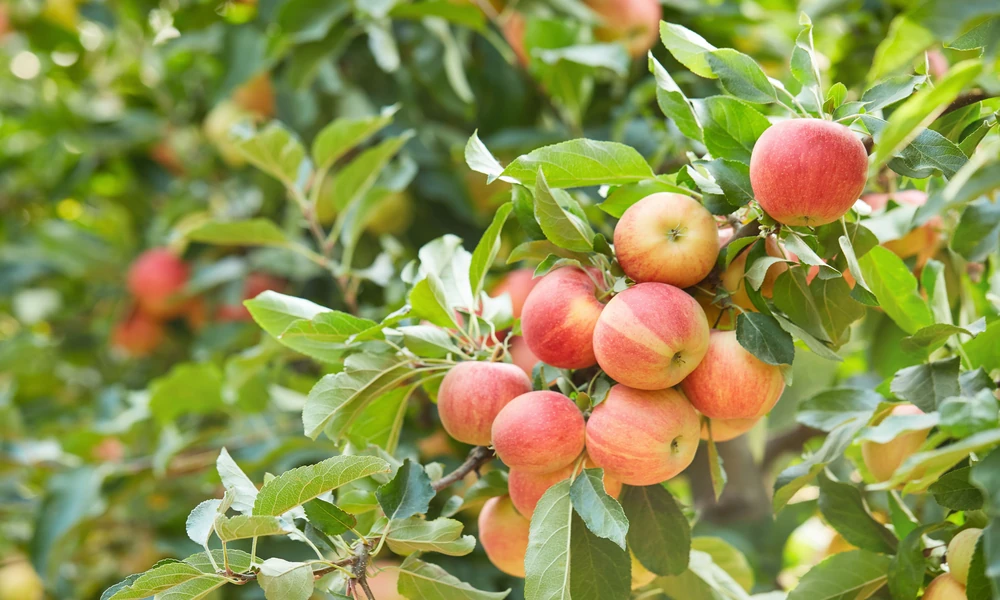
A basket of perfect fruit is only useful when the household knows what it wants to do with it. Some gardeners want a few ripe fruits for lunch, while others picture pies, preserves, winter stores, or bags passed across the fence. Those are not interchangeable ambitions. They affect the species, ripening period, flavour, keeping quality, and eventual size that deserve a place on the shortlist.
Starting with use also prevents the orchard calendar from becoming accidental. A garden filled with trees chosen only for blossom or familiar names often produces several crops at the same moment. A household-led plan spreads effort and pleasure more evenly. It asks who will pick, how quickly the fruit will be eaten, whether cooking is genuinely part of the week, and how much cool storage is available when autumn becomes busy.
Fruit-Trees, a specialist fruit tree nursery, explains that intended use belongs near the start of selection rather than at the end. Flavour for eating, texture after cooking, ripening date, keeping quality, and likely crop volume shape different shortlists. The fruit tree specialist advises matching those traits to ordinary household habits before comparing attractive variety names. That approach gives every tree a defined job and reduces the chance that a generous harvest becomes unused fruit or hurried work.
The point is not to predict every apple, pear, plum, or cherry that will be eaten years from now. It is to establish a sensible bias. A household that cooks every weekend has a different reason for planting from one that values fruit straight from the branch, and a gardener with a cool shed has options that a warm flat or compact terrace does not.
Five crop uses provide a practical route through the decision. They overlap, but each highlights a separate quality worth testing. The final task is to combine them into a short harvest brief that remains realistic when the trees are mature and the novelty of the first crop has passed.
Use One: Fresh Eating Needs a Ripening Window
Fruit intended for eating fresh has to arrive when people are present and interested. An early apple eaten within days of picking creates a different experience from a late cultivar that improves after a short rest. Pears also demand attention around the right picking moment, while cherries and soft plums reward prompt harvesting. The useful question is not simply whether the flavour sounds appealing, but whether its season fits holidays, school terms, work patterns, and the other crops already in the garden.
A sequence is usually more valuable than a single impressive peak. Two modest trees that ripen at different times often supply more enjoyable fruit than several varieties ready in the same fortnight. The sequence also spreads picking and routine checks. In a British summer, weather compresses or extends ripening, so dates should be treated as a window rather than an appointment. Even so, early, mid-season, and late descriptions create a sound first map.
Taste should be judged alongside texture and portion size. A strongly flavoured fruit might be perfect in small quantities, whereas a crisp, familiar apple earns repeated use in packed lunches. Children, older gardeners, and visitors all influence what disappears readily from the bowl. A fresh-eating tree succeeds when its crop is anticipated and picked, not when fruit hangs beyond its best because the household planted an idea of flavour rather than one it actually enjoys.
A simple tasting record keeps the fresh-eating plan honest. Note the week, condition at picking, texture, acidity, sweetness, and who actually chose the fruit from the bowl. The language can stay ordinary; consistent comparison matters more than formal scoring. Over two or three seasons, the notes show whether a cultivar fills its intended window or overlaps too heavily with another. They also prevent one unusually warm or cool year from defining the tree’s reputation permanently.
Use Two: Cooking Calls for Character After Heat
Cooking fruit is selected for what happens in the pan or oven. Acidity, firmness, juice, skin, and the ability to hold or lose shape all matter. A sharp apple that feels severe when raw often becomes balanced with heat and sugar. A plum that collapses readily suits compote but behaves differently in a tart where distinct pieces are wanted. Descriptions of dessert quality alone do not answer these kitchen questions.
Quantity has to match appetite for preparation. A productive cooker is an asset in a home where batches of sauce, pies, chutney, or frozen slices are normal. In a kitchen where cooking fruit is an occasional autumn pleasure, the same crop becomes pressure. Picking containers, worktop space, freezer capacity, and the time needed to sort sound fruit are part of the horticultural choice because they decide whether the harvest is used at its best.
Dual-purpose varieties offer flexibility, but the label should not conceal compromise. The fruit still needs to be pleasant in the form most often wanted, and its season should suit the household calendar. It is worth imagining three real meals rather than saying vaguely that the crop will be cooked. That small exercise exposes whether flavour, texture, and volume support an established habit or merely an attractive plan for a future that is unlikely to arrive.
Kitchen testing should happen at the scale of a real meal. Bake a familiar recipe, stew a measured amount, or compare slices cooked for the same time. The result reveals water release, collapse, acidity, and flavour concentration more clearly than general descriptions. Recording the amount used per dish also translates crop volume into household terms. A tree expected to supply twelve pies becomes a more practical proposition than one described only as a heavy cooker.
Use Three: Preserving Rewards a Predictable Surplus
Preserving gives abundance a purpose, but it works best when surplus is expected. Jam, jelly, bottled fruit, chutney, juice, and drying each favour different qualities. High flavour remains important after sugar or vinegar is added, while reliable ripening helps the gardener assemble enough sound fruit for a batch. Scattered handfuls have their own charm, yet they rarely justify sterilising jars and clearing an afternoon unless other fruit is ready at the same time.
The preserving plan should include failure and interruption. Rain splits some crops, wasps find ripe fruit, and a busy weekend postpones picking. A tree whose harvest must be processed in one urgent session leaves little margin. Staggered cultivars, a neighbour willing to share work, or a recipe that accepts mixed fruit gives the household resilience. The best surplus is generous enough to use without becoming a race against softness and decay.
Equipment is a quiet constraint. Large pans, jars, freezer space, labels, and somewhere cool for finished preserves take room. These details should influence the number and type of trees before planting, not become a surprise after a bumper year. Preserving is most satisfying when it converts a planned part of the crop into winter value. It is less convincing as an emergency response to fruit that no one wanted to pick in the first place.
Preserving days need a place in the annual diary. Estimate how many batches fit an ordinary weekend, who helps, and what happens if fruit ripens during a busy period. Sharing equipment or combining crops with a neighbour sometimes makes a larger harvest sensible. If no one wants that routine, fresh eating or storage deserves greater weight. The value of preservation lies in repeated enjoyment, not in jars made once and forgotten at the back of a cupboard.
Use Four: Storage Extends the Garden’s Calendar
Storage moves the reward of the garden beyond harvest day. Late apples with suitable keeping qualities are the clearest example, though the principle applies more widely to fruit that rests, ripens indoors, or is frozen in prepared portions. The selection must consider both cultivar character and the available store. A cool, dark, ventilated place is very different from a centrally heated utility room, and the tree plan should acknowledge that distinction honestly.
Sound storage begins in the garden. Fruit needs careful picking, gentle handling, and regular inspection; bruised or damaged specimens belong in immediate use rather than among the long keepers. That creates work at a busy point in the year. Gardeners who buy fruit trees with winter use in mind should therefore plan trays, shelves, access, and checking time alongside the varieties. Keeping quality is a partnership between genetics, harvest timing, and disciplined handling.
A realistic storage ambition also prevents monotony. Dozens of similar apples in February are worthwhile only if the household still wants them. Mixing fresh autumn fruit, dependable keepers, frozen cooking portions, and preserves produces a more varied calendar. The aim is not maximum duration for its own sake. It is to carry the particular flavours of the garden into weeks when outdoor choice is narrower and home produce feels especially welcome.
Audit the proposed store before planting. Check temperature variation through autumn and winter, ventilation, light, rodent security, shelf depth, and the route from tree to tray. A labelled sample box of bought local apples offers a harmless trial of the checking routine. If the space proves too warm or inconvenient, the garden plan can favour cultivars for earlier use instead of building an orchard around storage conditions that exist only on paper.
Use Five: Sharing Turns Excess Into Value
Sharing is a legitimate crop use, but it deserves more detail than the phrase give some away. A neighbour who enjoys a bag of apples, a community kitchen, family members who preserve, or an allotment exchange all offer different outlets. Each relies on timing, transport, and fruit in usable condition. A plan based on uncertain goodwill is fragile; a plan built around an existing relationship gives generous cropping a social purpose.
The easiest fruit to share is picked, sorted, and offered before it becomes a disposal problem. That means the tree must remain accessible and the gardener must have containers ready. Windfalls need a separate route from clean hand-picked fruit, and very ripe plums travel differently from firm apples. Thinking through that movement often changes preferences for tree height, harvest season, and the number of varieties reaching maturity together.
Generosity should not disguise overplanting. If every successful season depends on finding new recipients, the garden has accepted a recurring management task. One slightly smaller tree, a wider spread of seasons, or more dual-purpose fruit often gives greater pleasure. Sharing works best as the chosen destination for part of a useful harvest, not as a rescue for a crop whose volume was never matched to the people and time available.
Reliable recipients should be part of the brief by name or role, not as an anonymous future audience. A nearby family, community group, juicing arrangement, or preserving friend creates a credible route, provided timing and quality suit them. Discuss the likely season before the tree crops heavily. That conversation often uncovers preferences that improve the variety choice and avoids presenting someone with an urgent box of soft fruit they did not expect to process.
Turn the Five Uses Into a Household Harvest Brief
A harvest brief can fit on one page. Record the fruit eaten fresh each week, the dishes genuinely cooked, the preserves made in an ordinary year, the storage space that stays cool, and the people who reliably welcome surplus. Add the months when the household is away or especially busy. This produces a calendar of demand rather than a wish list of varieties, and it gives every proposed tree a role that can be tested.
Next, compare that demand with likely tree form, mature yield, picking access, and pollination needs. The figures need not be exact. Their purpose is to expose obvious imbalances, such as four heavy croppers for a two-person household or a collection dominated by one ripening period. A sound brief also leaves room for experiment. One unusual flavour is easier to enjoy when the rest of the planting covers dependable everyday uses.
The final choice should feel specific without becoming rigid. Seasons vary, tastes change, and young trees take time to reveal their character. Even so, a use-led plan gives the gardener a stable reason for each planting and a sensible basis for future additions. The orchard then develops around meals, storage, generosity, and pleasure, rather than around labels collected without a clear destination for the crop.
Revisit the harvest brief after each substantial crop. Household size, diet, storage, and available time change, while trees mature and yields fluctuate. The response need not be removal or another purchase. Pruning, thinning, sharing, processing, and better picking can rebalance use. A living brief gives the orchard direction without freezing it at planting-day assumptions, and it makes future additions fill genuine gaps rather than repeat roles already covered.
