
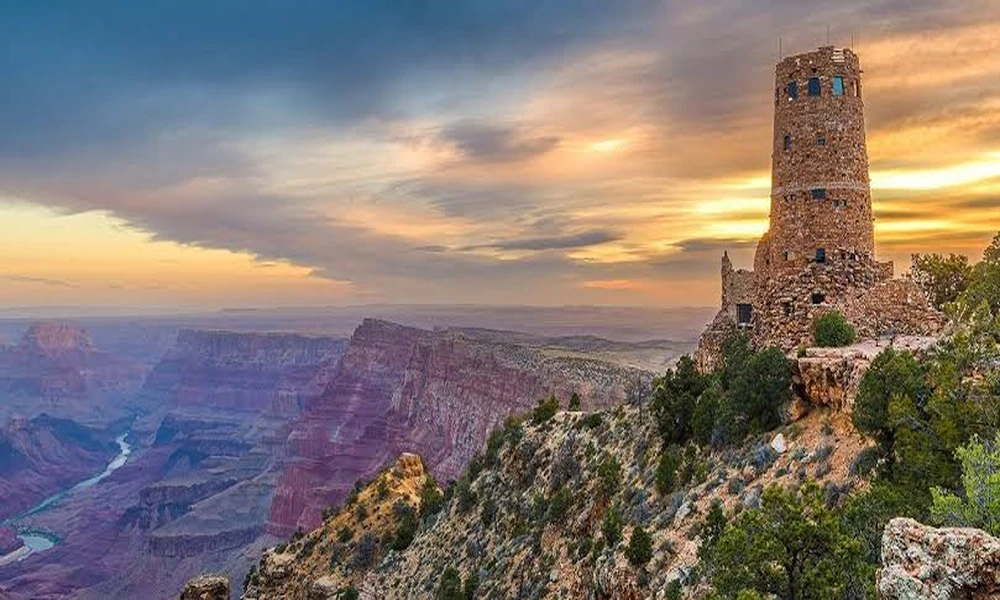
Nearly 5 million people show up at the Grand Canyon every year, snap a photo from Mather Point, and leave feeling like they barely scratched the surface. That’s not a knock on the canyon. That’s a planning problem.
The South Rim is the most accessible stretch of one of the planet’s most dramatic landscapes. It’s open year-round, has paved viewpoints, and sits within a four-hour drive of Las Vegas and Phoenix. But “accessible” doesn’t mean “easy to experience well.” First-timers who drive themselves routinely miss the best overlooks because parking is a nightmare in peak season, they don’t know which viewpoints face east for morning light, and no one’s explaining the geology while they stare into 1.8 billion years of rock.
A guided tour fixes all three problems. The question is which kind of tour fits your trip.
Why the South Rim Beats the North Rim for First-Timers
The North Rim is gorgeous. It also closes from mid-October through mid-May, requires a longer drive through remote Arizona, and has far fewer services. For a first visit, you want the South Rim. Roughly 90% of all Grand Canyon visitors head there, and the infrastructure shows: shuttle buses, ranger programs, multiple visitor centers, and a dense cluster of overlooks along Desert View Drive.
The real choice isn’t between the two rims. It’s how you move through the South Rim once you get there. You’ve got four realistic options: self-drive, shuttle bus, hiking, and guided tour. They’re not equal.
| Option | Flexibility | Parking Stress | Interpretive Info | Best For |
|---|---|---|---|---|
| Self-Drive | High | Very High (summer) | None | Repeat visitors |
| Park Shuttle | Medium | Low | None | Budget travelers |
| Rim Hike | High | Low | Self-guided only | Hikers, slow travelers |
| Guided Vehicle Tour | Medium | Zero | Expert, continuous | First-timers, families |
If it’s your first visit, a guided vehicle tour wins on almost every axis. You don’t park. You don’t wonder if you picked the right viewpoint. Someone who actually knows the canyon is narrating the whole thing.
The Rim View Decision Matrix: Picking Your Tour Type
Not all guided tours are built the same, and this is where most people go wrong. Here’s a framework worth using before you book anything. Think of it as a three-part filter: pace, perspective, and time of day.
Pace means how you move through the park. A vehicle tour covers more ground in less time. A hiking tour moves slower and gets you below the rim, which gives you a completely different sense of scale. Ground level versus rim level feels like two different canyons.
Perspective means altitude. Ground tours keep you at rim level or just below. Air combos, like a hummer ground tour paired with a helicopter, layer in an overhead view that no ground experience can replicate. You understand the canyon’s width differently from 1,000 feet up than you do standing on the edge of it.
Time of day is the factor most people ignore until it’s too late. Midday light at the South Rim flattens everything. Morning light from the east-facing overlooks is warm and angular. Sunset tours catch the canyon going through a color sequence, orange to red to violet, that genuinely earns the word “unforgettable.”
Run any tour option through those three filters and you’ll know immediately whether it’s the right fit for your group.
What a Ground Tour Actually Gives You
Picture this: the Johnson family from Las Vegas books a Saturday morning tour. They’ve got two kids, one stroller, and exactly one day at the canyon before driving back. Self-driving would mean circling the Mather Point parking lot for forty-five minutes, missing two prime overlooks because they didn’t know about them, and getting back to the car without knowing what the Kaibab Limestone layer they were standing on actually means.
On a vehicle tour, they load up and their guide hits Mather Point, Yavapai Geology Museum, and two or three lesser-known viewpoints. The kids hear about condors and the Colorado River’s 277-mile path through the canyon. Nobody worries about the car. They’re done in two and a half hours with a genuine understanding of the place.
That’s the actual value of a ground tour: it converts passive sightseeing into an experience with context. Buck Wild Hummer Tours runs exactly this kind of tour from the South Rim, with custom vehicles that put passengers higher for better sightlines and guides who have been doing this for years inside the canyon ecosystem.
When to Add a Helicopter or Airplane Combo
Combo tours, meaning a ground vehicle tour paired with an air experience, are the premium tier, and they’re worth it for the right traveler.
The math is simple. A ground tour gives you the rim experience with context. Add a helicopter, and you get the canyon’s true scale from the sky. The inner gorge, the Colorado River 4,000 feet below the rim, the side canyons branching off in every direction. You simply cannot appreciate that geometry from the ground, no matter how many overlooks you hit.
The people who regret skipping the air combo are almost always the ones who came back for a second visit specifically to do it. If you can only make one Grand Canyon trip, the combo is the honest recommendation.
The Economic Pull of Grand Canyon Tourism
The canyon’s draw isn’t just cultural. It’s a serious economic engine for northern Arizona. According to the National Park Service, 4.7 million visitors to Grand Canyon National Park in 2023 spent $768 million in communities near the park, supporting 10,100 jobs in the local area with a cumulative benefit of $1.0 billion to the local economy. That figure comes from the NPS Grand Canyon visitor spending report published in September 2024.
That kind of local economic weight explains why tour operators, guides, and hospitality businesses around Grand Canyon Village stay fully booked through the summer months. It also explains why booking your tour in advance, especially for sunset slots and combo experiences, matters more than most first-timers expect.
Outdoor Recreation at Scale: Why Guided Tours Are Growing
Grand Canyon tours don’t exist in a vacuum. They’re part of a much larger shift in how Americans spend time and money outdoors. According to the U.S. Bureau of Economic Analysis, the outdoor recreation economy accounted for 2.4 percent ($696.7 billion) of current-dollar gross domestic product for the nation in 2024. The full BEA data release is available at the Bureau of Economic Analysis outdoor recreation statistics page, published March 2026.
Guided nature and adventure tours sit squarely inside that growth. As more travelers prioritize experiences over souvenirs, the demand for knowledgeable, high-quality guides keeps rising. That’s a good thing for anyone visiting the canyon, because competition drives quality up and pushes operators toward better vehicles, better guides, and better routes.
A Practical Pre-Trip Checklist
- Book your tour at least two weeks out in summer. Sunrise and sunset slots go first.
- Decide on your pace filter first: full ground tour, add hiking, or go air combo.
- Wear closed-toe shoes. Every rim tour involves some walking on uneven surfaces.
- Bring water even on a vehicle tour. The South Rim sits at 7,000 feet and the air is dry.
- Plan to arrive at the South Rim entrance at least 30 minutes before your tour time to account for the entry process.
The One Thing That Makes the Difference
Every great Grand Canyon trip has one thing in common: someone who knew the canyon was involved. That might be a ranger, a longtime local, or a professional guide. It’s almost never a generic audio tour on a smartphone app.
The canyon is 277 miles long, a mile deep, and up to 18 miles wide. No signage is going to give you a feel for those numbers. A guide who watches your face as the scale hits you, and then says exactly the right thing about the Vishnu Schist at the bottom, turns a sightseeing stop into a memory. That’s what you’re really paying for.
So book the tour, use the Rim View Decision Matrix to pick the format that fits your group, and don’t skip the sunset. What would you regret more: spending a little extra, or leaving the canyon feeling like you barely scratched the surface?
