
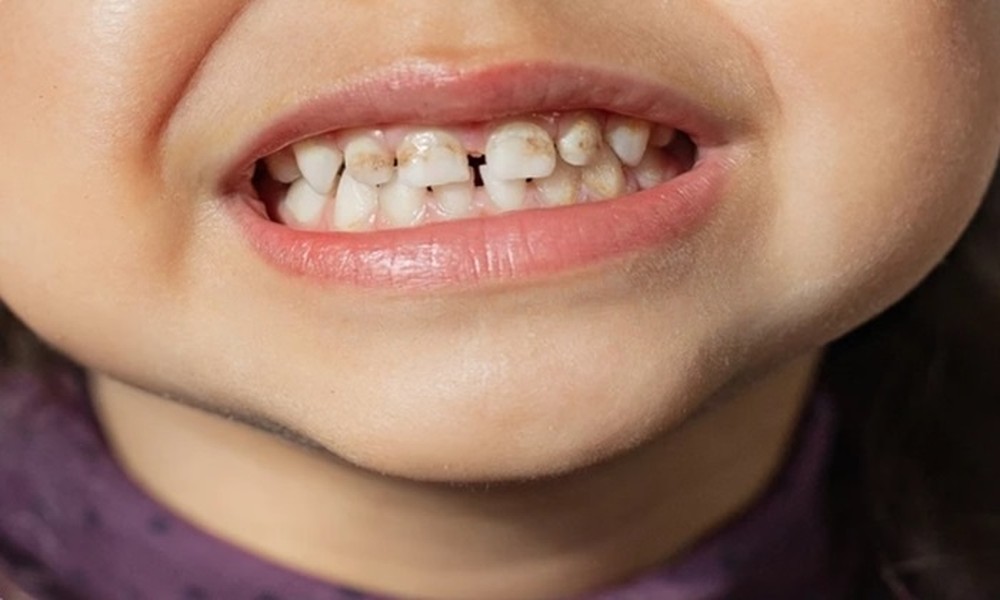
You might have noticed a brown line near your child’s gums, or tiny white spots that were not there before, and felt that little jolt of worry in your stomach. You brush their teeth, you try to watch the sugar, yet their smile suddenly looks stained. Your mind may go straight to “Are these cavities?” or “Did I do something wrong?” Before you panic, it can help to talk with a children’s dentist in Lee, who can examine your child’s teeth, explain what’s going on, and guide you on the next steps.
This is a common moment for parents. The good news is that many stains on kids’ teeth are not decay at all. They are usually harmless, often fixable, and sometimes even preventable once you know what is behind them. In short, stains are a signal, not a verdict on you as a parent or on your child’s health.
Here is the short version. Most non-cavity stains in children come from six places. Food and drinks, plaque and tartar, natural tooth color, medicines or illnesses, early enamel problems, and habits like not rinsing after using certain rinses. Some can be polished away by a pediatric dentist, some fade with time, and some need a closer look, but almost all are manageable.
So where does that leave you? It leaves you with a chance to understand what you are seeing, to calm the anxiety a bit, and to decide when it is time to get professional help.
Why do kids get stains on their teeth if they do not have cavities?
Before talking about each specific cause, it helps to separate two ideas in your mind. Color change and decay. Cavities mean the tooth structure is being destroyed. Stains mean the tooth surface or the outer layer of enamel is picking up pigment or has developed a different texture or mineral pattern. One can exist without the other.
The emotional challenge is that both can look scary. You might see a dark spot and picture drills, pain, and cost. You might even feel guilty, wondering if you missed something with brushing or checkups. That stress is real, and it can make you want to either ignore the problem or overreact to it.
Instead, it helps to slow down and ask a simple question. Has the color changed, or has the tooth shape changed too? If the tooth still looks smooth and intact and your child is not in pain, stains without cavities are very possible.
Reason 1: Food and drinks that leave color behind
One of the most common causes of kids’ teeth discoloration is simply what they eat and drink. Colored sports drinks, flavored waters, sodas, berries, tomato sauces, soy sauce, curry, and even some natural fruit juices can all leave pigment that clings to enamel over time.
Imagine a child who sips dark-colored drinks through the day, or snacks often instead of eating in set meals. The teeth spend more time “bathed” in color, and stains can build up near the gumline and between teeth. This is more of a cosmetic concern, yet it can be a useful early warning that habits may need a tweak.
Rinsing with water after strongly colored foods, using a straw for occasional dark drinks, and keeping sweets and juices to mealtimes can help reduce this kind of staining.
Reason 2: Plaque, tartar, and that stubborn brown line
If you have noticed a dark line along the lower front teeth, your first thought might be decay. Often it is something different. Plaque that stays on the teeth can harden into tartar. Tartar can absorb pigments from food or bacteria and turn yellow, brown, or even black.
This kind of stain often shows up in kids who brush quickly, miss the gumline, or struggle to floss. It can also be more common if there is crowding, braces, or mouth breathing that dries the teeth. The frustration here is that no matter how much you brush at home, that line does not seem to budge.
The solution is usually a professional cleaning. A pediatric dentist or hygienist uses special tools to gently remove tartar and polish the enamel. Afterwards, the teeth often look dramatically brighter. You can then work with them on where your child is missing with the toothbrush so that it does not build up again.
Reason 3: Natural tooth color and developing enamel
Some children simply have teeth that look more yellow, brownish, or uneven in color even when they are perfectly healthy. Baby teeth are often whiter. Permanent teeth are naturally more yellow. When they first erupt, you can see a sharp contrast that makes the new teeth look “stained” by comparison.
In other cases, the enamel developed with mild variations. That can lead to patches that are whiter, creamier, or slightly darker than the surrounding tooth. These are not dirt. They are part of the tooth’s structure. They may stand out more when the tooth first appears, then blend in somewhat over time.
There are professional options, like careful polishing or, for older children and teens, dental whitening. Professional groups such as the American Academy of Pediatric Dentistry provide guidance about the use of dental bleaching for child and adolescent patients, so whitening is not something you should try on your own without advice.
Reason 4: Medicines, illnesses, and long term color changes
Some medications can change the color of teeth. Certain antibiotics used during tooth formation, long term use of iron supplements, or conditions that affect enamel development can all leave teeth looking gray, brown, or banded.
This can feel especially unfair as a parent. You followed medical advice to keep your child well, and now you are facing a cosmetic issue that you did not choose. The important thing to remember is that your child’s health came first, and color changes are usually a cosmetic problem, not a sign of current illness.
When staining is linked to medicine or illness, a pediatric dentist will usually focus on protecting the teeth from decay first. Cosmetic choices come later. In some cases, gentle whitening, microabrasion, or other treatments may help. A dentist can also help you understand what is possible and what might be better to accept and simply monitor.
Reason 5: Early enamel damage, white spots, and not-quite cavities
Not all stains are dark. Chalky white or cream spots, especially near the gumline or on front teeth, can be early signs that enamel has lost minerals. These areas can look like stains even though they are lighter than the rest of the tooth.
This is where the line between “stain” and “cavity” starts to blur. These spots may not be cavities yet, but they are weak areas that can turn into decay if nothing changes. They can appear after braces, with frequent snacking, sugary drinks, or poor brushing.
The solution is to treat these areas as a warning sign. A pediatric dentist might use fluoride, sealants, or special pastes to help re-harden the enamel. Your role at home is to improve brushing, cut back on frequent sugar, and use fluoridated toothpaste correctly. Over time, some white spots can become less noticeable, though they may not disappear fully.
Reason 6: Mouth rinses, fluoride, and over the counter whitening
Ironically, products meant to help teeth can sometimes cause or highlight stains. Some antibacterial rinses can cause brown staining that looks alarming but is superficial and polishable. Fluoride is important, yet if swallowed in large amounts during tooth development it can cause fluorosis, which appears as white or brown spots on permanent teeth.
Parents also sometimes try whitening products meant for adults. Children’s enamel is thinner and more porous, so harsh whitening can lead to uneven color, sensitivity, or damage. It is far safer to talk with a pediatric dentist before using any whitening products.
If you are curious about safer ways to brighten teeth, the American Dental Association offers guidance on teeth whitening and what to consider. This can help you understand what is safe for adults and why children need a more cautious approach.
How do at home efforts compare with professional care for stained kids’ teeth?
Once you notice stains, it is natural to wonder whether you can handle it at home or if you need help from a pediatric dentist. Both have a place, and they work best together.
| Approach | What it can help with | Limits and risks |
|---|---|---|
| Daily brushing and flossing | Prevents new plaque stains, helps early white spots, keeps gums healthy | Cannot remove hardened tartar or deep stains, technique can be inconsistent in kids |
| Diet changes and water rinsing | Reduces new food and drink stains, supports overall oral health | Does not remove existing stains, requires family habit changes |
| Over the counter whitening products | May slightly lighten surface stains in adults | Often not recommended for children, risk of sensitivity or uneven color, should be used only with dental guidance |
| Professional cleaning with a pediatric dentist | Removes tartar and many stains, checks for true cavities, tailors advice to your child | Requires time and cost, needs regular follow up for lasting results |
If you are unsure where your child falls, resources like the ADA’s MouthHealthy section for babies and kids’ oral care can give you a sense of what is normal and what needs attention.
What can you do right now if your child has stained teeth?
Once you understand that tooth staining in children is usually manageable, the next question is simple. What now.
1. Take a calm, honest look at the pattern
Notice where the stains are. Near the gums. Between teeth. Only on new adult teeth. On baby teeth that are about to fall out. This helps you describe the problem accurately to a pediatric dentist. It also helps you spot clues. Brown lines near the gums often point to tartar. White chalky spots can mean early enamel changes. Overall yellowing of new teeth is often just normal permanent tooth color.
2. Tighten up the basics at home
Even before an appointment, small changes can make a real difference.
- Help your child brush twice a day for two full minutes with a fluoride toothpaste appropriate for their age.
- Focus on the gumline and the back teeth where stains and plaque like to hide.
- Limit frequent snacking and sugary drinks. Offer water for most between meal drinks.
- Rinse with plain water after colored foods or drinks.
These steps protect against true cavities and can slow or stop new stains from forming.
3. Schedule a visit with a pediatric dentist
A pediatric dentist can tell you whether you are dealing with surface stains, early enamel changes, or actual decay. They can clean, polish, and, when appropriate, talk through safe cosmetic options as your child grows. Regular professional care, combined with good habits at home, is the safest path to a healthy smile that you and your child can feel good about.
Moving forward with more confidence
Seeing stains on your child’s teeth can stir up fear, guilt, and a rush of questions. Once you understand that many stains are not cavities, and that you have clear steps you can take, the situation becomes less frightening and more manageable.
You do not need to have all the answers on your own. A trusted pediatric dentist can partner with you, explain what you are seeing, and help you choose what matters most right now. With a bit of information and steady support, your child’s smile can stay healthy, even if the path includes a few stains along the way.
